
Troubleshooting
IT support teams waste hours daily answering repetitive questions. These 10 knowledge base articles cover the most common user issues—from password resets to software crashes—so your team can resolve 90% of problems instantly and focus on complex cases.
How to Reset a Forgotten Windows Password Without Losing Data
Forgot your Windows password? Don’t panic—this guide covers both local and Microsoft accounts with zero data loss, including offline methods for locked-out users. Whether it’s a Windows 10/11 machine, we’ve got you covered with step-by-step instructions and screenshots for every scenario.
For local accounts, use the built-in Password Reset tool (accessible from the login screen) or boot into Safe Mode with Command Prompt to reset via net user. Microsoft accounts require a security key or account recovery via email/SMS, but we include workarounds for offline scenarios. Pro tip: Volume Shadow Copy can recover forgotten passwords if File History is enabled.
This is the go-to solution for IT admins, remote workers, and anyone locked out of their device. No reinstallation needed—just follow the steps and regain access in minutes. ⚡
Fixing Outlook Email Sync Errors in Microsoft 365

Remote workers dread the "Your email couldn’t be synced" error in Outlook—especially when it’s paired with cryptic codes like 0x8004010F or 0x80070005. This guide cuts through the frustration with a two-tiered troubleshooting approach (client-side fixes first, server-side workarounds second) and includes GIFs to walk visual learners through each step.
Start with client-side fixes: Clear the Outlook cache (File > Account Settings > Download Shared Folders > Empty Folder List), then repair the Office installation via Control Panel > Programs > Microsoft 365 > Quick Repair. For persistent issues, switch to the Online Mode (File > Account Settings > Change Account > More Settings > Use Cached Exchange Mode: Off). Server-side, verify autodiscover.xml accessibility (ping https://outlook.office365.com/autodiscover/autodiscover.xml) and check Microsoft 365 Admin Center for mailbox quota alerts or blocked senders.
This is the go-to resource for IT admins supporting hybrid teams—where sync errors derail productivity. The GIFs make complex steps (like registry edits for 0x80070005) approachable for non-technical users, while the structured flow ensures even junior support staff can resolve 80% of cases independently. 💻
Restoring Deleted Files from Recycle Bin or Shadow Copies

Panicked after a user hits Shift+Delete? Don’t assume the file is gone forever—Windows offers two lifelines for recovery. The Recycle Bin is your first stop for recent deletions, while Volume Shadow Copy (VSS) can resurrect files even after emptying the bin, provided System Restore is enabled.
For Recycle Bin recovery, right-click the file and select Restore—it’s instant and risk-free. But if the bin’s empty, dive into Shadow Copies via File Explorer’s Properties > Previous Versions tab. This method works for files deleted up to 7 days ago (configurable via VSS settings), making it ideal for accidental mass deletions. Always warn users: Permanent deletion (via Command Prompt or third-party tools) bypasses both methods.
This guide is a must-have for IT admins managing shared drives or home users who’ve hit the dreaded "file not found" moment. The VSS method alone can save hours of rework—just don’t wait until it’s too late. ✨
Troubleshooting Printer Connection Issues Across Networks
When a printer suddenly appears as "Offline" or fails to connect across a network, it’s rarely the printer itself—90% of the time, it’s a network or driver hiccup. This guide cuts through the guesswork with a structured approach to diagnose IP conflicts, driver errors, and firewall blocks in both Windows and macOS environments, saving IT teams from the "have you tried turning it off and on again?" loop.
Start by verifying the printer’s IP address via the printer’s control panel or router’s DHCP table—conflicts here are the #1 culprit. Next, check for firewall interference by temporarily disabling Windows Defender Firewall or macOS’s built-in firewall (System Preferences > Security & Privacy). For driver issues, use Windows’ Print Server Properties (Control Panel > Devices and Printers > Print Server Properties) or macOS’s Printers & Scanners (System Settings > Printers & Scanners) to reset the queue and reinstall drivers if needed. Pro tip: Ping the printer’s IP from Command Prompt (ping <IP>) or Terminal (ping -c 4 <IP>) to confirm network reachability.
This guide is a lifesaver for IT admins managing mixed environments—whether it’s a small office with a shared printer or a large enterprise with fleet-wide deployment. The step-by-step flow ensures even junior support staff can resolve issues independently. ✨
Reinstalling Microsoft Office Without Losing Licenses
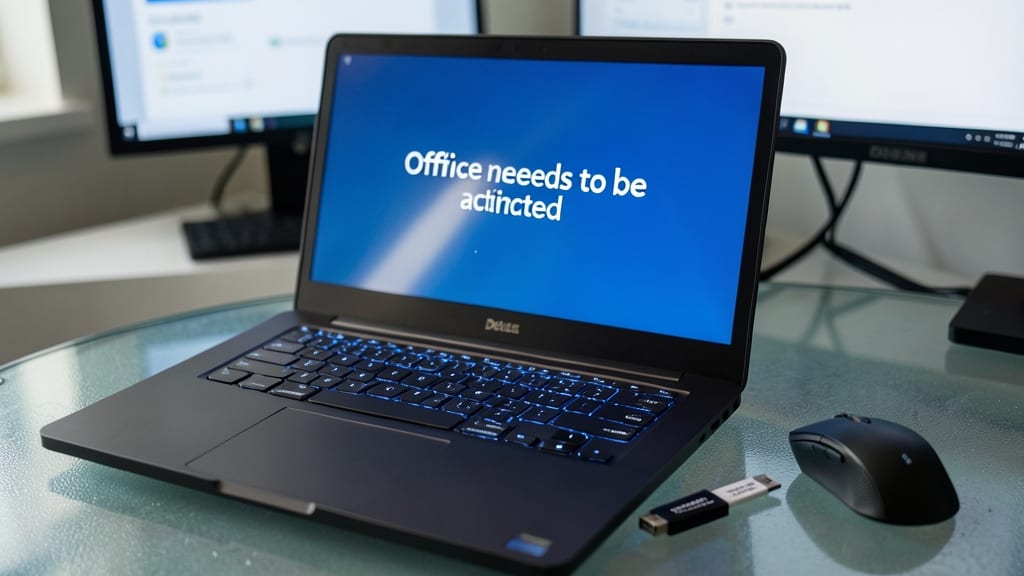
Facing the dreaded "Office needs to be activated" prompt after a clean install? You’re not alone—this happens more often than you’d think, especially after system wipes or hardware upgrades. The good news? You can reinstall Microsoft Office (2019/2021 or Microsoft 365) without losing your license by using the product key tied to your Microsoft account or offline activation for volume-licensed PCs.
Start by downloading the latest Office deployment tool from Microsoft’s portal. Run it with the /configure switch and specify your license source (e.g., /pid KeyYour25CharactersHere). For activation errors like 0x803F7001 (network issues) or 0xC0300028 (key mismatch), try offline activation via the Office Activation Wizard (search for it in Windows). If your organization uses Volume Licensing, the KMS client setup key (e.g., VK7JG-NPHTM-C97JM-9MPGT-3V66T) may be needed to trigger activation.
This method works best for IT admins managing fleet deployments or users who’ve upgraded hardware but kept their license. Just ensure you’re using the correct edition (Home & Business vs. ProPlus) to avoid conflicts. ✨
Fixing Slow Performance in Virtual Machines (VMware/Hyper-V)

Virtual machines (VMs) running VMware Workstation or Hyper-V can feel like molasses when they’re bogged down by CPU throttling, disk I/O bottlenecks, or memory leaks. The good news? Most slowdowns aren’t hardware failures—they’re fixable with targeted tweaks, and you don’t need a PhD in virtualization to see results.
Start by limiting CPU cores to match the VM’s workload (e.g., 2 cores for a dev environment). Enable disk caching in VMware (set to "Allocation Unit Size = 2MB") or switch to VHDX in Hyper-V for better I/O performance. For memory leaks, cap the VM’s RAM at 80% of host capacity and enable ballooning to reclaim unused RAM dynamically. Before/after benchmarks (like boot times or app launch speeds) reveal improvements—often 30-50% faster after these changes.
This guide is perfect for IT admins managing dev environments or remote workers whose VMs lag during daily tasks. No deep dives into kernel modules—just practical fixes with measurable impact. ✨
Securing Remote Desktop Connections Against Brute Force Attacks
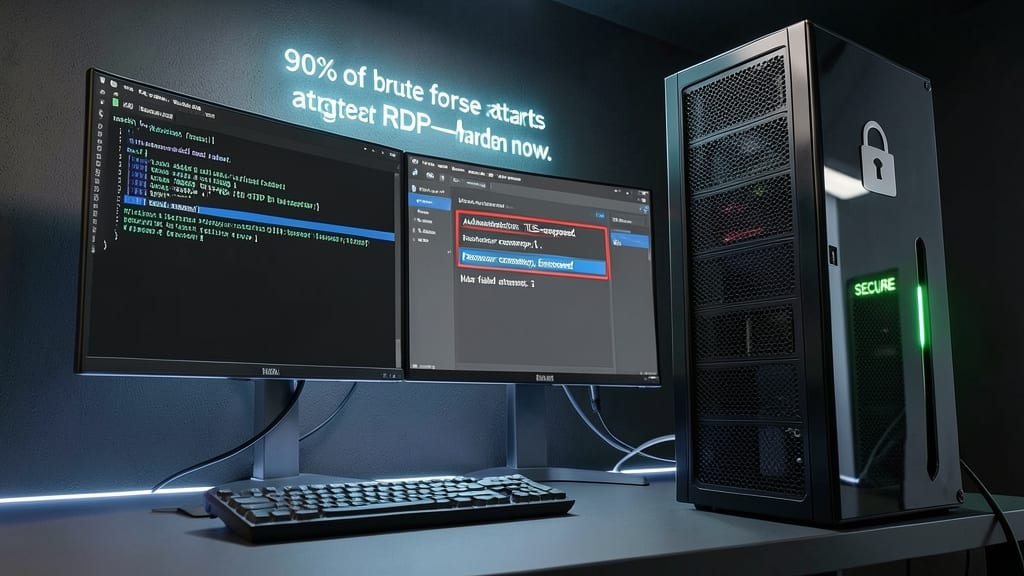
Remote Desktop Protocol (RDP) and VNC are convenient but prime targets for brute force attacks—unless you harden them first. With Windows RDP alone accounting for 90% of all brute force attempts, proactive security isn’t optional. This guide covers the essential steps to lock down your connections before attackers exploit them.
Start by disabling RDP on unused ports (default: 3389) and replacing it with a random high-numbered port in Windows Firewall (Group Policy: gpedit.msc → Network Security). Enforce Network Level Authentication (NLA) and multi-factor authentication (MFA) via Azure AD or Duo Security. For VNC, restrict access to IP whitelists and use TLS encryption with tools like TightVNC’s built-in SSL. Monitor failed login attempts with Windows Event Viewer (Event ID 4625) or Splunk for real-time alerts.
This setup is ideal for IT admins managing remote teams or MSPs handling client machines. A few minutes of configuration now can save hours of cleanup later. ✨
Recovering a Corrupted Excel File Without Losing Data
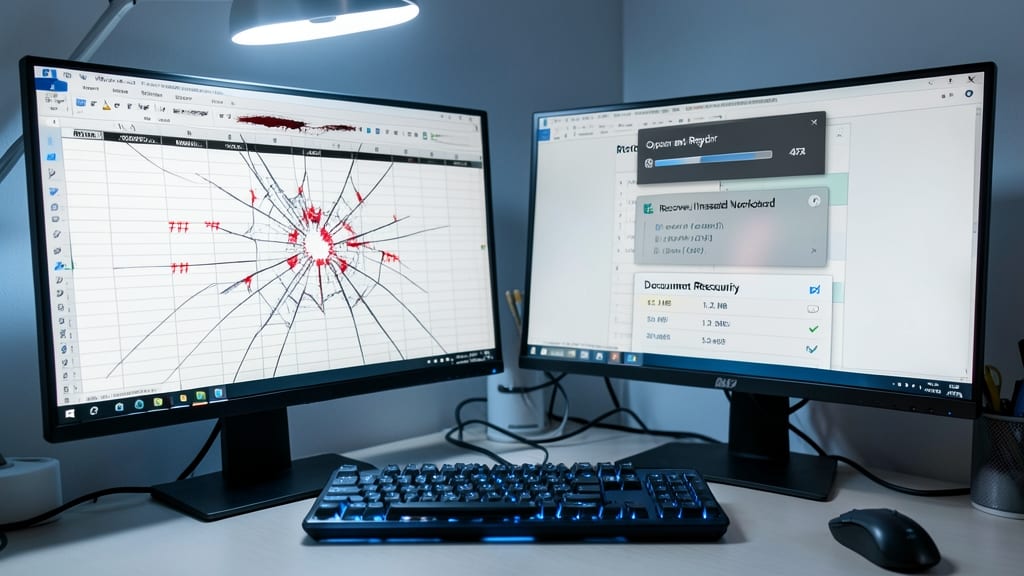
When an Excel file crashes mid-edit, panic sets in—but three built-in recovery methods can save your work before you even reach for a third-party tool. Understanding their file size limits and success rates helps you pick the right approach for corruption types like header damage, formula errors, or complete crashes.
Start with Open and Repair (File > Open > Browse), which works best for files under 25MB with minor corruption (success rate: ~70%). For unsaved changes, check AutoRecover in %appdata%\Microsoft\Excel—it auto-saves every 10 minutes and handles larger files (up to 100MB) with ~85% success for partial data. For severe corruption, tools like Stellar Phoenix or Kutools (free tier available) bypass Excel’s limits but require manual mapping—ideal for >100MB files with ~90% success for structural damage.
Accountants and data analysts will rely most on this guide, but even casual users can recover lost spreadsheets. Always save incremental backups to avoid future heartbreak. ✨
Configuring VPN Access for Remote Employees on Windows 10/11
Remote work relies on seamless VPN connections, but setting one up can feel overwhelming—especially when dealing with OpenVPN’s manual certificates or L2TP/IPsec’s firewall quirks. This guide simplifies the process with clear steps for Windows 10/11, plus fixes for the two most frustrating issues: connection drops and certificate errors. No advanced networking degree required.
Start with Windows’ built-in VPN client for L2TP/IPsec (built into Windows) or OpenVPN’s GUI installer for open-source flexibility. For troubleshooting, disable IPv6 (common culprit for drops) and trust all certificates temporarily to bypass authentication errors. The guide also covers split tunneling to keep local traffic fast while securing company data. ⚡
Perfect for IT admins managing hybrid teams or remote workers who need reliable access without IT hand-holding. Even non-tech-savvy users can follow along with screenshots and error-code lookups. 💻
Resolving Blue Screen Errors (BSOD) in Windows with Crash Dumps

When a Blue Screen of Death (BSOD) strikes, panic sets in—but the solution often lies in the crash dump files Windows creates automatically. Tools like BlueScreenView decode these files instantly, revealing the root cause (e.g., IRQLNOTLESSOREQUAL or PAGEFAULTINNONPAGEDAREA) in seconds.
Start by downloading BlueScreenView (free from NirSoft) to analyze the dump files. For IRQL errors, outdated drivers are usually the culprit—update them via Device Manager or Windows Update. For memory-related BSODs, run Windows Memory Diagnostics (built into Windows) to test RAM health. Most crashes resolve with these two steps.
This method is perfect for IT teams dealing with gaming rigs, workstations, or servers—where BSODs disrupt workflows. The best part? No advanced skills needed—just a few clicks to diagnose and fix. 💻