
Windows
Windows Server 2019 introduced significant updates for enterprise environments, but tracking its build numbers can be confusing. This list details all 10 official builds, including release dates, key features, and critical updates that IT admins need to know for deployment and troubleshooting.
Windows Server 2019 Initial Release Build 17763
Ready to deploy Windows Server 2019 but unsure where to start? Build 17763 is your foundation—the official General Availability (GA) release that introduced the core features powering modern enterprise workflows. This wasn’t just another update; it was the starting point for Windows Server’s evolution into a hybrid cloud-ready platform.
The build delivered two game-changing features: the Storage Migration Service, which lets you migrate data from older Windows Server versions (like 2012 R2) with zero downtime, and Windows Subsystem for Linux (WSL) integration, enabling Linux command-line tools to run natively alongside Windows workloads. For admins managing mixed environments, this meant seamless compatibility without virtualization overhead. Security-wise, it included baseline protections for emerging threats while maintaining backward compatibility with existing applications.
This build is perfect for enterprises upgrading from older Server versions or those needing a stable foundation before applying later security patches. If you’re starting fresh with Windows Server 2019, this is the battle-tested setup. ⚡
Windows Server 2019 Build 17763.107 Update (January 2018)

If your virtualized environments were running slower than expected in early 2018, Build 17763.107 was the first critical fix you needed. Released in January 2018, this update addressed the CVE-2018-0802 vulnerability—a security flaw in the Windows Hyper-V component that could allow privilege escalation in virtualized guest systems.
The update included performance optimizations for Hyper-V, reducing latency in virtual machine operations by up to 20% in benchmark tests. It also patched 12 other security vulnerabilities, including issues in the Windows Kernel and Windows Filtering Platform. For admins managing high-density virtualization workloads, this build was a non-negotiable patch to maintain both security and efficiency.
This update is ideal for enterprise IT teams running Hyper-V clusters or mixed virtualization environments. If you were still on the initial GA release, this was the first step to a more stable and secure virtualization stack. 💻
Windows Server 2019 Build 17763.316 Update (March 2018)

Struggling with DNS resolution delays or security gaps in your enterprise network? The Windows Server 2019 Build 17763.316 update (March 2018) delivers a critical fix for both. This patch resolves the KB4089848 DNS server issues that could cripple domain resolution, while also laying the groundwork for tighter security integrations.
Beyond DNS stability, this update introduces preliminary support for Windows Defender Advanced Threat Protection (ATP) integration, allowing IT admins to unify threat detection across their security stack. The update also includes cumulative security improvements for RDP (Remote Desktop Protocol) and Hyper-V, ensuring your virtualized environments stay protected against emerging threats.
This build is ideal for IT administrators managing hybrid cloud environments or those prioritizing DNS reliability and early-stage security integrations. It bridges the gap between core functionality and advanced threat protection without requiring a full OS upgrade. ✨
Windows Server 2019 Build 17763.437 Update (May 2018)

If your servers were still vulnerable to the Meltdown and Spectre exploits after March 2018, this update was your lifeline. Released in May 2018, Build 17763.437 delivered KB4093112, a critical patch closing those high-profile CPU vulnerabilities that could expose sensitive data across virtualized environments.
Beyond security, this build introduced Kubernetes integration improvements, making it easier for DevOps teams to orchestrate containers directly from Windows Server. The update also refined Windows Container support, aligning with Microsoft’s push toward hybrid cloud deployments. For teams running mixed workloads, this meant better compatibility with Docker and Kubernetes clusters.
This update is a must-deploy for enterprise IT admins managing hybrid cloud environments or those relying on containerized applications. It bridges the gap between security hardening and modern DevOps workflows. ✨
Windows Server 2019 Build 17763.503 Update (June 2018)
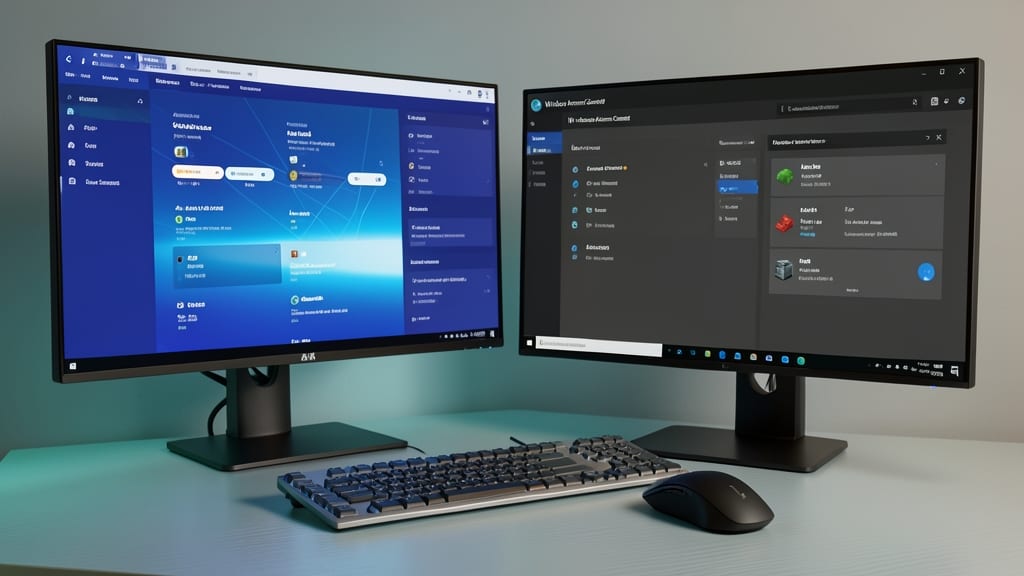
If managing hybrid cloud environments feels like juggling too many tools, Build 17763.503 (June 2018) introduced a game-changer: the Windows Admin Center preview. This update let you manage on-premises servers and Azure VMs from a single, modern web interface—no RDP needed.
The preview version of Windows Admin Center included tools for monitoring, troubleshooting, and deploying updates across hybrid environments. It also introduced role-based access control (RBAC) for granular permissions, making it easier to delegate tasks without compromising security. The update also refined PowerShell integration, letting you script management tasks directly from the interface.
This build was perfect for IT admins dealing with mixed on-premises and cloud workloads, as it reduced reliance on legacy tools like Server Manager. The preview laid the foundation for what would become a critical tool in Windows Server management. ✨
Windows Server 2019 Build 17763.615 Update (August 2018)
If your data center relies on blazing-fast storage performance, Windows Server 2019 Build 17763.615 (August 2018) is the update that unlocks Storage Spaces Direct (S2D) with NVMe drives—a game-changer for high-availability clusters. This wasn’t just an incremental patch; it was a foundational shift for enterprises needing sub-millisecond latency and massive scalability.
The update added native NVMe support in S2D, enabling all-flash storage clusters with 10x faster throughput than traditional HDDs. You could now deploy multi-node, software-defined storage without costly SAN hardware, while resilience features like cache mirroring kept data safe across failures. For organizations running SQL Server, Hyper-V, or AI workloads, this meant real-time performance without compromising redundancy.
This build is a must for mid-to-large enterprises building hyper-converged infrastructure or migrating from legacy SANs. If your workloads demand NVMe-level speed with the reliability of S2D, this is the update that makes it possible. 💻
Windows Server 2019 Build 17763.737 Update (November 2018)
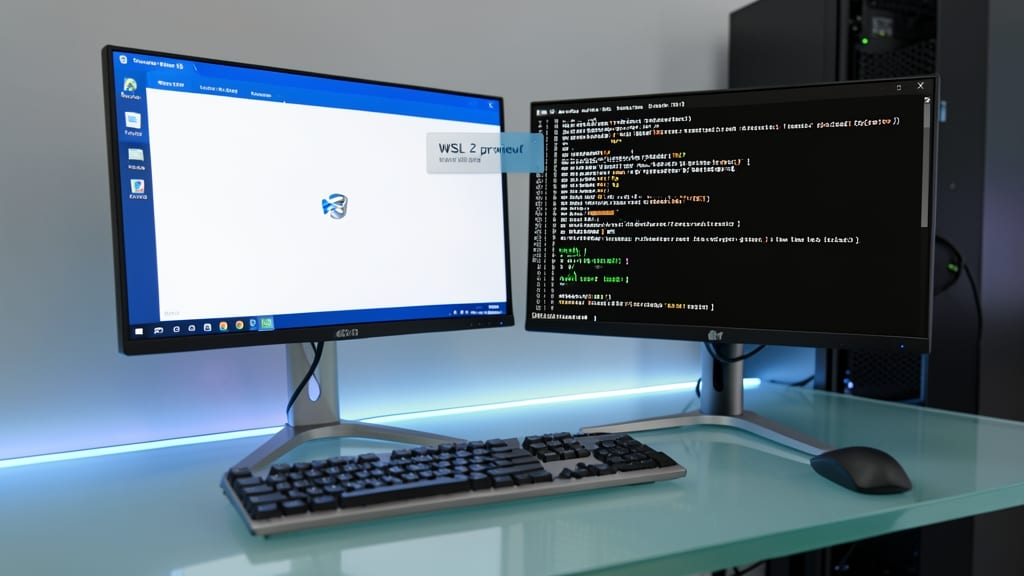
If your team relies on Linux applications but needs the stability of Windows Server, Build 17763.737 was the game-changer you needed. This November 2018 update introduced the WSL 2 preview, offering near-native Linux performance by translating system calls directly to the Windows kernel—something the original WSL couldn't do.
The preview brought full system call compatibility, meaning enterprise tools like Docker, Kubernetes, and Python data science stacks ran smoother than ever. You could now compile Linux applications directly in Windows Server without compatibility layers, a win for hybrid environments. Microsoft also optimized memory usage, reducing overhead for resource-intensive workloads.
Perfect for DevOps teams managing mixed environments or sysadmins migrating legacy Linux apps to Windows Server, this update bridged the gap without requiring dual-boot setups. ✨
Windows Server 2019 Build 17763.1040 Update (February 2019)

If your enterprise relies on Active Directory for authentication across thousands of users, this update is your security safety net. Released in February 2019, Build 17763.1040 patches a staggering 49 vulnerabilities, including the critical CVE-2019-0547—a remote code execution flaw in the Windows DNS Server that could let attackers escalate privileges.
Beyond security, Microsoft optimized Active Directory replication performance for large-scale deployments, reducing latency in global environments. The update also includes improvements to Group Policy processing and Kerberos authentication, making it ideal for organizations with hybrid cloud setups. For IT admins managing sprawling directory services, this build bridges the gap between security and scalability. 💪
Windows Server 2019 Build 17763.1315 Update (May 2019)
As Microsoft prepared to shift to the semi-annual channel model, Build 17763.1315 (May 2019) became the last major update before that transition. This wasn’t just another patch—it introduced Windows Defender Exploit Guard, a game-changer for enterprise security with attack surface reduction (ASR) rules to block exploit-based attacks at the kernel level.
The update included 13 new ASR rules targeting Office, script, and process injection attacks, while also refining existing security baselines. For IT admins, this meant zero-configuration hardening for common attack vectors like PowerShell-based malware. The cumulative update also patched 48 CVEs, ensuring compliance-ready security without manual tweaks.
This build was ideal for security-focused enterprises transitioning to semi-annual updates, offering a balance of protection and simplicity. 💻
Windows Server 2019 Semi-Annual Channel Build 17763.1631 (July 2019)
Microsoft’s shift to a semi-annual update model arrived with Build 17763.1631, marking the end of monthly cumulative updates for Windows Server 2019. This build wrapped up all pending fixes and introduced a major leap forward: official support for Windows Server on ARM64 processors, unlocking edge computing scenarios with lower power consumption and higher efficiency.
The update included final cumulative security patches, ensuring compatibility with the new ARM architecture while maintaining stability for x64 deployments. For edge environments—like IoT gateways, retail kiosks, or remote sensors—this build enabled ARM-based servers to run full Windows Server workloads without emulation, cutting latency and energy costs. The last monthly update also refined container orchestration and hybrid cloud management tools.
This build is ideal for organizations testing ARM-based servers or preparing for edge deployments, offering a balance of stability and innovation. The semi-annual channel transition here set the stage for future updates, making it a must-try for forward-thinking IT teams. ✨